How do birds fly?
Lue answers for ages 4–11, then goes 2 steps deeper each time a child asks why.
-
Lue says
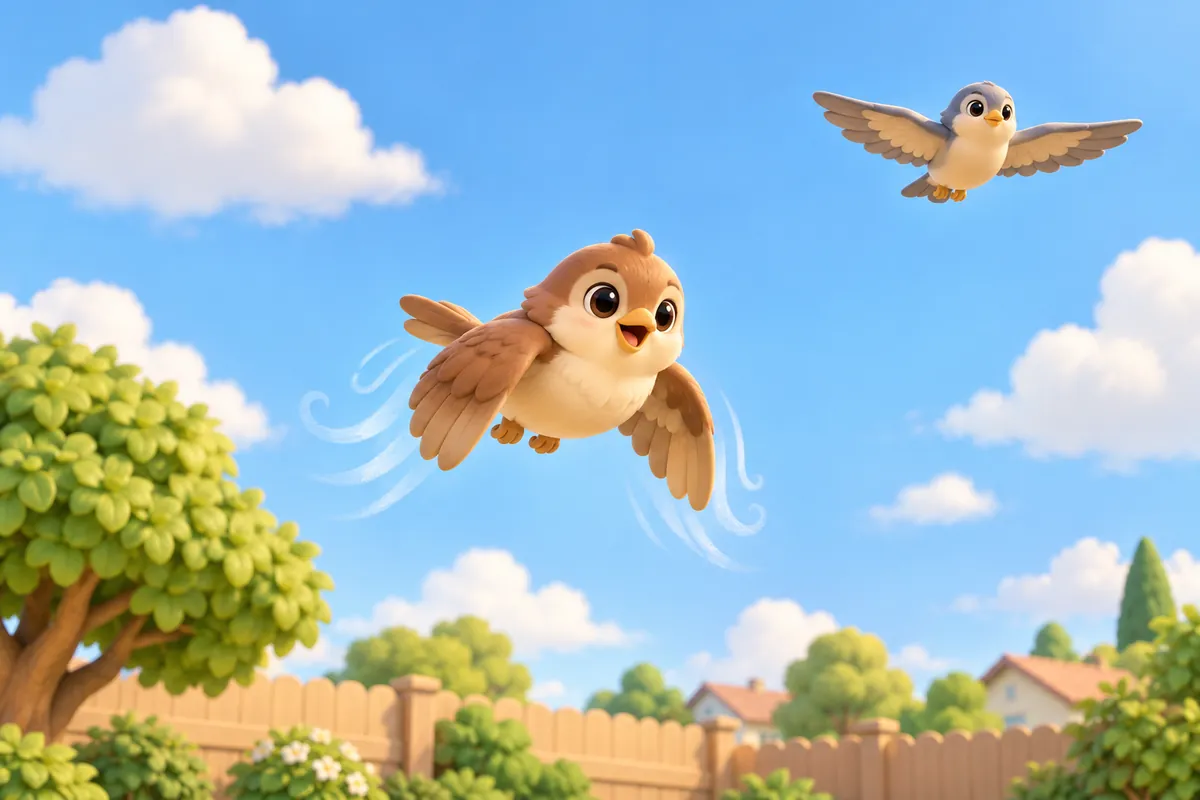
When a bird flaps its wings down, they push the air down and back. The air pushes back on the bird, up and forward. On the way up, the bird bends its wings a little, so they slip through the air. Flap after flap, the bird rises and moves along through the sky.
Checked against How do birds fly? (Smithsonian National Air and Space Museum)
-
Why can a bird glide without flapping?
Look at a wing from the side. It's curved, a bit like a plane's wing. As the bird moves along, air flows over the curved top, and the air pressure there drops. The air underneath pushes the wing up. That push is called lift, so a bird can glide with its wings held still.
Checked against How do birds fly? (Smithsonian National Air and Space Museum)
-
Why isn't a bird too heavy to fly?
A bird's bones are hollow, with spaces for air inside, so its body is very light. Its breastbone is big, and it holds strong muscles for flapping. That makes a bird light enough to lift, and strong enough to flap.
Checked against How birds fly (Science Learning Hub, New Zealand)
 In Lil' Phil, reaching the bottom of this wonder earns a sticker for Lue's collection.
What children ask next


Let Lue answer this one
On your child's tablet, Lue says it out loud while the picture paints itself in. Tap Why? to go deeper.